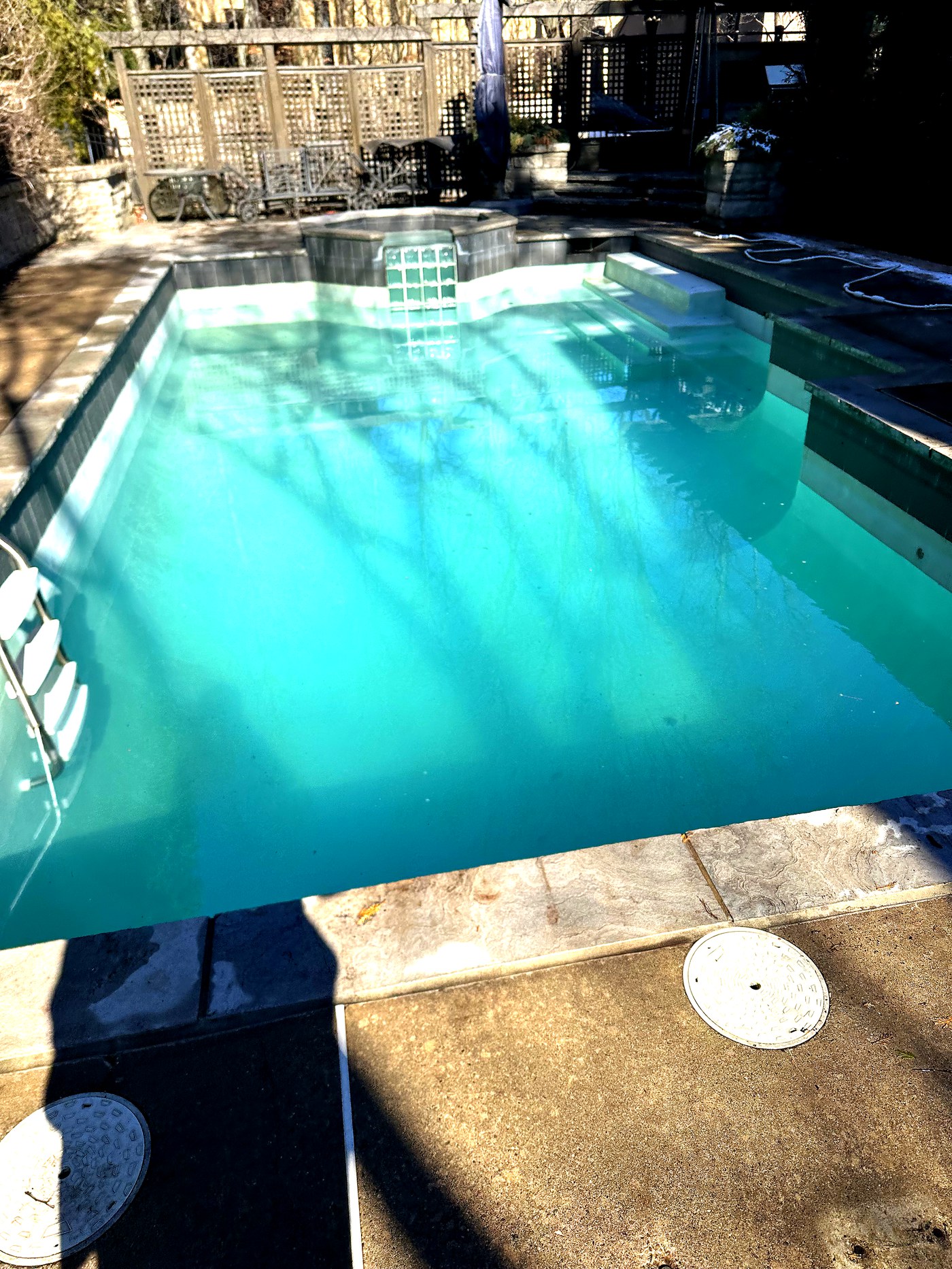
How Often Does Your Pool Need to Be Serviced?
The answer isn't the same for every pool. Pool size, how often it's used, what surrounds it, and even the weather all factor in. Here's a practical guide to figuring out the right maintenance frequency for your specific pool — and what happens if you fall behind.
The Short Answer
For most residential pools that are actively used during swim season, weekly professional service is the gold standard. Bi-weekly works for pools with lighter use or with automation systems. Monthly service is generally not enough during warm months to maintain water quality reliably.
Factors That Determine How Often You Need Service
1. How Often You Swim
Swimmer load is one of the biggest variables in pool chemistry. Every person who gets in the pool introduces oils, sunscreen, sweat, and bacteria. A pool used daily by a family of five needs far more frequent chemical attention than one used twice a week by two adults.
2. What's Around Your Pool
Trees are beautiful — but they're also a pool's worst enemy. Leaves, pollen, seed pods, and bird droppings all introduce organics that consume chlorine and raise your filter's workload. If your pool is surrounded by trees, expect to need more frequent service (and more frequent vacuuming).
Open yards with little shade mean more UV exposure, which burns off chlorine faster. You may need to supplement with stabilizer (CYA) to protect chlorine levels between visits.
3. Indoor vs. Outdoor
Indoor pools behave very differently. Without rain diluting the water, TDS (total dissolved solids) builds up more quickly and the water needs to be partially drained and refilled periodically. Without UV, chlorine consumption is lower — but without the natural pH depression from CO₂ absorption outdoors, indoor pools tend to drift alkaline. Indoor pools can often do well with bi-weekly service, but need highly consistent chemistry management.
4. Pool Size
Larger pools have more water volume, which means chemistry shifts more slowly — a buffer against big swings. But more surface area means more debris accumulation, and more water to treat when you do need to adjust chemistry. The net effect on service frequency is roughly neutral for most sizes.
5. Your Equipment
Variable speed pumps with automation systems can run longer, more efficient filtration cycles. Salt chlorine generators provide a more consistent chlorine dose than manual additions. Pools with upgraded equipment can sometimes stretch to bi-weekly service without issue. Older equipment without automation typically needs more attention.
What Happens If You Under-Service Your Pool
Pool chemistry is not static. It shifts constantly based on swimmers, temperature, rain, sunlight, and equipment. When you fall behind:
- Week 1 without service: Chlorine levels drop, pH drifts. Water may start to look slightly hazy.
- Week 2: Algae spores begin to establish. Chlorine demand spikes. Filter efficiency drops as debris builds up.
- Week 3+: Visible algae bloom. Water turns green, yellow, or cloudy. Getting back to clear water now requires shock treatment, algaecide, extended filtering — and multiple service visits.
The cost of neglect almost always exceeds the cost of regular maintenance.
What You Can Do Between Service Visits
Professional service handles the chemistry, equipment, and deep cleaning — but there are things you can do between visits to stay ahead:
- Skim the surface daily if trees or wind drop debris into the pool
- Empty your skimmer basket when it fills up — a clogged basket restricts flow and makes your pump work harder
- Check your water level — it should sit at the midpoint of your skimmer opening
- Run your pump at least 8 hours per day during warm weather
- Keep a basic test kit handy and check chlorine and pH a couple of times per week if you're swimming frequently
Our Recommendation
If your pool is your primary summer entertainment space — open daily, kids swimming, guests over regularly — weekly service is worth every dollar. You'll never deal with green water, unexpected chemical costs, or the embarrassment of a pool you can't use when you want to.
If your pool gets lighter use (weekends mostly, couple of people), bi-weekly service is often a reasonable balance. We can assess your specific pool and usage pattern and give you an honest recommendation.
Want a Maintenance Plan That Fits Your Pool?
We'll take a look at your pool and recommend the right frequency — no one-size-fits-all packages here.
Pool Maintenance Service Contact Us